

The Dash
Bonus post: What does it mean to build a life worth living?

i.
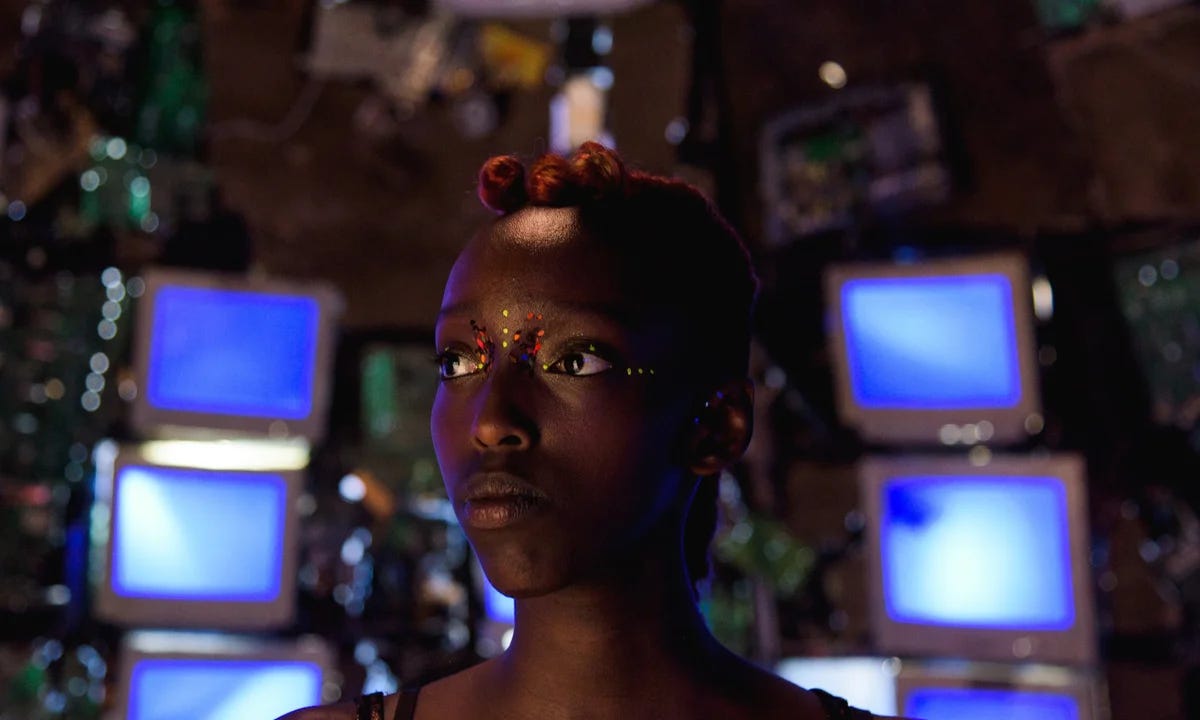
Last Saturday, I attended a screening of Neptune Frost, a 2021 Afrofuturistic musical and political treatise directed by poets and polymaths Saul Williams and Anisia Uzeyman that defies categorization. The film touches on so many aspects of modern life — labor exploitation, how tech rules our lives in the West while ending others, gender dysphoria, rejecting binaries, and how to build a path forward in the midst of forces that are constantly trying to casually destroy us.
Before the screening, poet Amari Amai read poems about their experiences as a Black queer person growing up in Humboldt Park, Logan Square, and North Lawndale, west side neighborhoods that have transformed in ways (good, bad, and halfway in between) that have rendered those places damn near unrecognizable to those of us who grew up in Chicago.
And at that screening, I met a 76-year-old man named Vernon who knew Emmett Till.
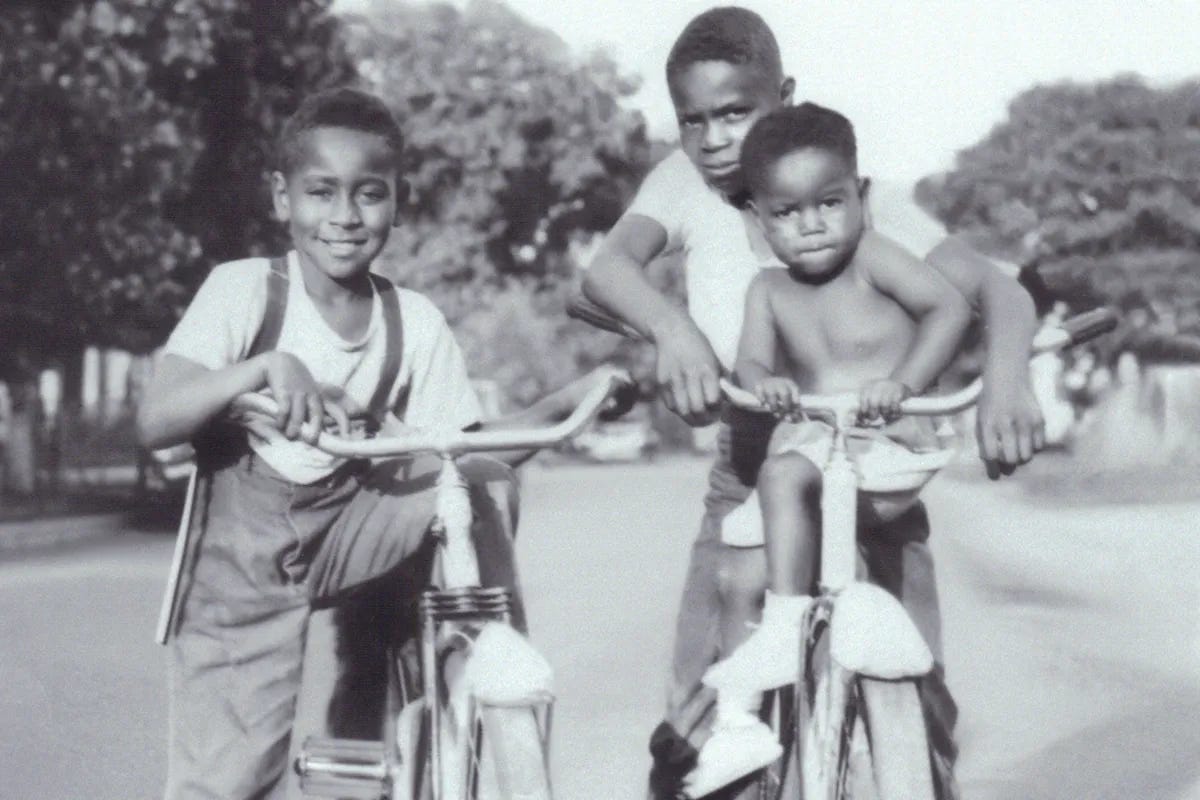
Vernon, with his kind eyes, easy smile, and neatly trimmed grey beard. Vernon, who remembers Emmett sharing candy with him when Emmett was a tween and he was 5. Vernon, who remembers seeing Emmett ride around the neighborhood on his bike.
He remembered Emmett as the boy he was, not the symbol he later became.
Vernon had spent much of the discussion after the screening imparting wisdom and knowledge about Black political thought and resistance to both the panelists and the attendees, all of us who were at least 30 to 40 years his junior. He even shared that his partner with him that night, a beautiful and regal Black woman also in her 70s, dressed in blue, had met him only two years ago.
I was reminded of the dash.
ii.
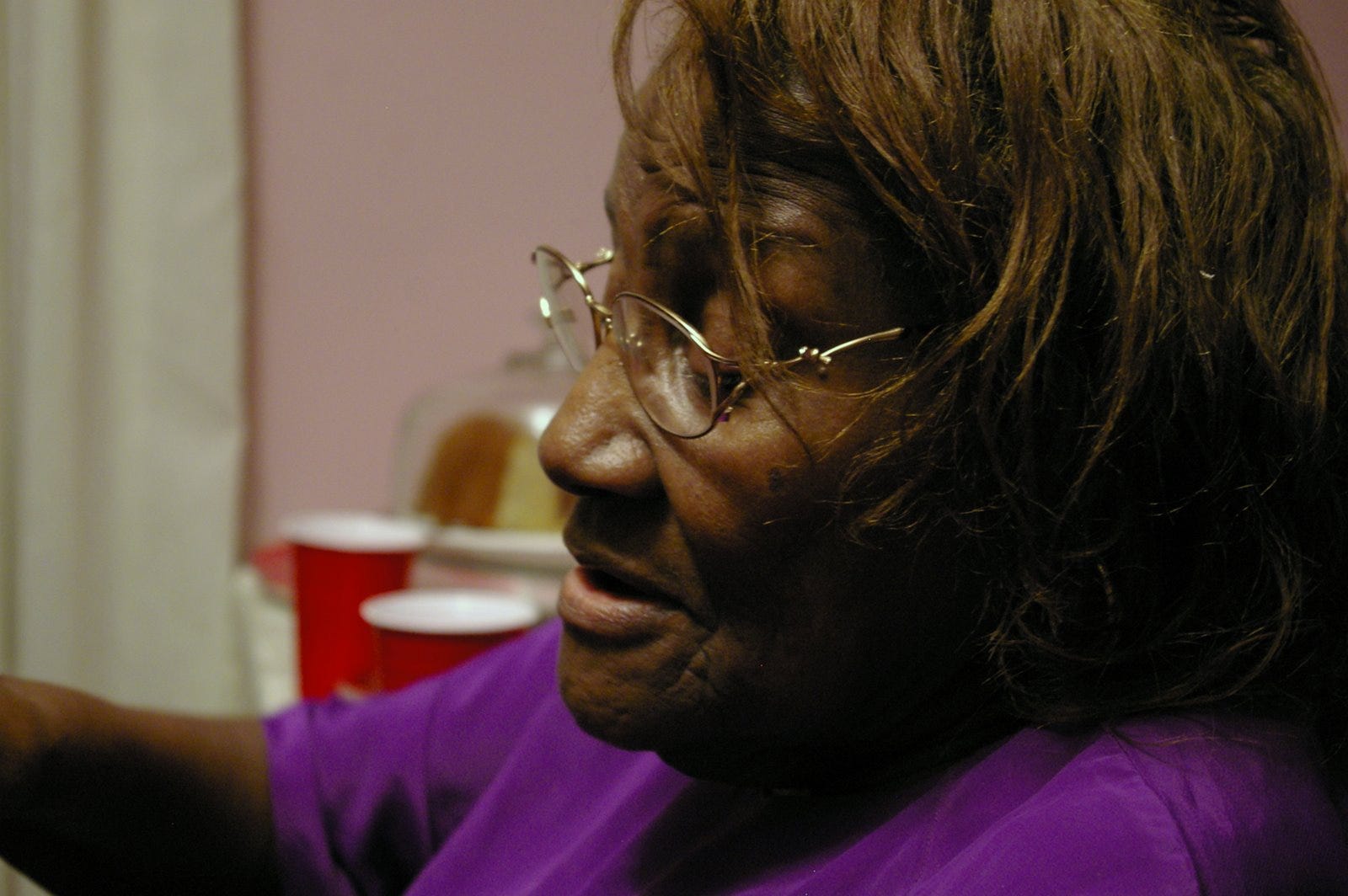
In 2016, my great-aunt Julia, my granny’s big sister, passed away. And during her funeral service, I remember the surprisingly young reverend speaking to everyone sitting in the pews at the church where Aunt Julia had been an usher about the dash between your sunrise and your sunset. “What matters most is what you do in between the dash,” he exclaimed into the mic.
I heard him, but I didn’t quite hear him until many years later.
iii.
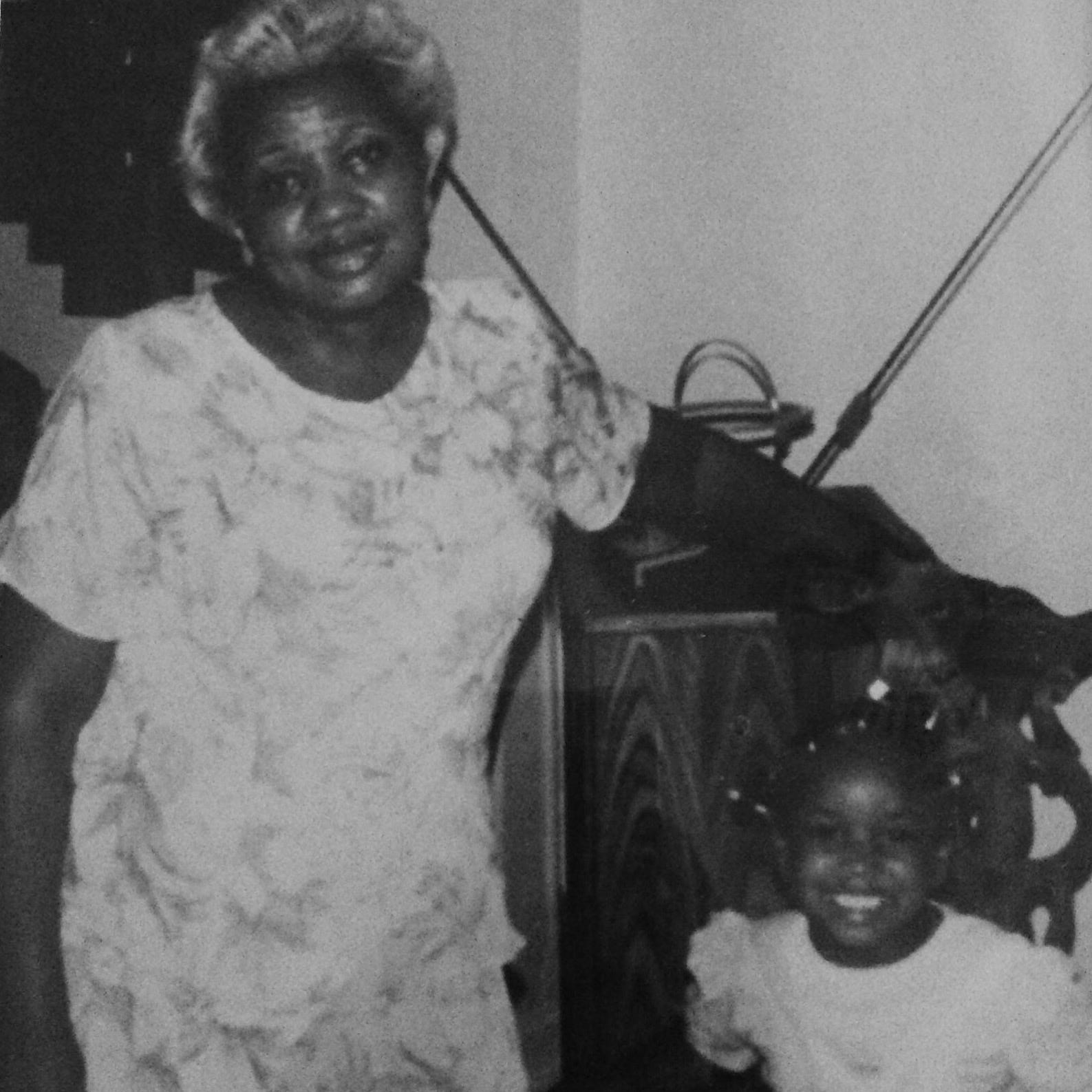
My granny, Catherine Helen Lee, was born in 1938 in Clarksdale, Mississippi. She died in Chicago in 2006, just a few months after I completed my undergraduate studies at Howard University and had turned 21.
She had been sick for a long time, without telling anyone, until her illness had progressed to the point of needing a lung transplant. However, she passed away before the surgery could happen, and before I could even visit her in person one last time.
I think about her often, and what kind of life she built for herself and her two children, my mom and my uncle, here in Chicago, on the west side of the city in North Lawndale.
She was from the Mississippi Delta, where her whole family — three sisters and two brothers — uprooted themselves during the Great Migration. (Only one of her brothers went back to the Delta, and I wish we had been close enough for me to ask him why before he passed.)
She always worked, including at Walgreens and at the Chicago Tribune paper-processing plant.
She loved watching wrestling — especially Hulk Hogan — and taking her kids to roller derby games and listening to the blues. The blues makes sense considering she was neighbors with John Lee Hooker before moving to Chicago.
She would take me with her to corner taverns with classic Old Style signs hanging over the outside awnings, and introduce me to her friends and the bartender proudly as her grandbaby.
My granny was just 68 when she became an ancestor, but still. She had 68 years.
She experienced motherhood and grandmotherhood.
She survived the West Side riots after Martin Luther King was assassinated.
She raised my uncle and my mom as a single mother, and my mom became one of the first people in her family to graduate from college.
My granny shopped at Carson Pirie Scott, made sure her nails were always manicured, and took my baby cousin and me to Beef N Brandy in downtown Chicago, which I used to think was the peak of fine dining as a kid.
Those places have long since closed, one now a Target, the other a boarded-up, lonely-looking building on a strip of shuttered stores along State Street.
I certainly wish we had had more time together. But living nearly 70 years on this earth is a feat that too many Black people never get a chance to experience.
iv.
Meeting Vernon on Saturday was a reminder that Emmett Till had such a brief amount of time within the dash, just 14 years old when he was brutally killed in Money, Mississippi. How his mother dedicated the rest of her life in between the dash fighting for justice because the men (and woman) responsible for her son’s killing were never held to account.
I was reminded that Emmett deserved to live a full life, as Vernon did. He deserved to grow old, to experience heartache, to fall in love again, to study new ways of being, to impart his wisdom and knowledge with a group of fellow Chicagoans from different generations, everyone hungry to learn from each other, to connect with one another, to sit and consider our different lived experiences with each other.
I’m reminded over and over yet again that Black people – Black children and women and trans people especially — do not often get a chance to have a long stretch of time in between the dash. I’m also reminded how important it is for us to embrace every part of our community, not just who we deem acceptable just because they’re familiar to what we’re used to seeing.
In Neptune Frost, the rebels against society succeed not just because they survive but because they thoroughly embrace the protagonist Neptune, a trans revolutionary who disrupts society through hacking. Amari Amai said something profound in the talkback after the screening was over, that as a trans person, they want to be embraced, not just tolerated. They wanted their family and community to be curious about them, invested in them. Celebrated for the full spectrum of who they are.
v.
I’ve noticed in myself that when I’m writing, I try to end on a hopeful note. Or an imparting wisdom note. I tend towards uplift, and I’m not sure that’s always the right instinct.
Perhaps the best way to end this is with an ode to Emmett Till by Chicago native, poet, sociologist, and all-around genius Eve L. Ewing, considering the inspiration for this writing was a night of experiencing art made by poets:
I saw Emmett Till this week at the grocery store
looking over the plums, one by one
lifting each to his eyes and
turning it slowly, a little earth,
checking the smooth skin for pockmarks
and rot, or signs of unkind days or people,
then sliding them gently into the plastic.
whistling softly, reaching with a slim, woolen arm
into the cart, he first balanced them over the wire
before realizing the danger of bruising
and lifting them back out, cradling them
in the crook of his elbow until
something harder could take that bottom space.
I knew him from his hat, one of those
fine porkpie numbers they used to sell
on Roosevelt Road. it had lost its feather but
he had carefully folded a dollar bill
and slid it between the ribbon and the felt
and it stood at attention. he wore his money.
upright and strong, he was already to the checkout
by the time I caught up with him. I called out his name
and he spun like a dancer, candy bar in hand,
looked at me quizzically for a moment before
remembering my face. he smiled. well
hello young lady
hello, so chilly today
should have worn my warm coat like you
yes so cool for August in Chicago
how are things going for you
oh he sighed and put the candy on the belt
it goes, it goes.
Copyright © 2018 Eve L. Ewing. Used with permission of the author. This poem originally appeared in Tin House, Spring 2018.
Thanks for coming out to Elastic Arts Dark Matter Series! ✊🏾
So much of what you wrote here touched me. We really don’t have long here in the dash.